-
Your Survival System Did Its Job Too Well
Blog 5 of 5 · From the Cell to the Person “Not ‘what’s wrong with me?’ but ‘what happened to me?’” Matt Hudson Have you ever wondered why you can forget where you put your keys five minutes ago, yet remember a moment of embarrassment from thirty years back in full colour? It isn’t a…
/
-
Healing Without the Story
Blog 4 of 5 · From the Cell to the Person “You didn’t have to tell me. Your body did the talking.” Matt Hudson What if you never had to tell anyone what happened to you? Not your therapist. Not your partner. Not even yourself. What if healing trauma meant clearing the weight of it…
/
-

Functional Neurological Disorder: Could Undiagnosed Trauma Be the Hidden Driver?
Seizures, tremor, weakness, and every scan clear? I explore how undiagnosed trauma, the Emotional Memory Image and the nervous system’s protective wiring may sit behind Functional Neurological Disorder, and where healing can begin.
/
-

We’re losing 338 spoken words a day. Here’s what it’s doing to your body
A wound that wouldn’t heal, a wrong-number phone call, and the twenty-year decline in how much we actually talk. Freedom To… Be Analogue.
/
-

How Undiagnosed Trauma Becomes Dis-ease: What Your Body Remembers That Your Mind Forgot
Why does your body keep the score when your mind forgets? Where is that score kept? And how do you get it to stop?
/
-

Are You Brave Enough to Be Well?
Have you ever stopped to consider why you might fear genuine wellness more than remaining unwell? This article reveals why individuals hold onto illness via hidden Emotional Memory Images—those profound emotional imprints that form a pain-rooted identity. Explore the courage needed to release these imprints, dismantle typical excuses such as “It’s simply who I am,”…
/
-
Pain Isn’t the Problem, Our Medical Model Is
The shortcomings of Western medicine are significant, often stemming from a medical model that emphasises treating symptoms rather than promoting holistic healing. This focus has contributed to the growth of a substantial drug industry, which, although lucrative, frequently neglects the root causes of illness. Even with advancements in medical technology and treatment options, many individuals…
/
-

Sticky Pain and Other Chronic Psychophysiological Dis-eases
Chronic psychophysiological dis-eases, commonly known as “sticky” conditions, create complex connections between the mind and body that can be challenging to untangle. These conditions often arise from undiagnosed trauma and present as ongoing physical pain or discomfort. This article delves into what these diseases are, the diagnostic processes involved, and the significant role trauma plays…
/
-

The Healing Power of Metaphors: A Biophilic Mindset for Pain and Healing
If pain had a voice, it wouldn’t be clinical. It wouldn’t speak in milligrams or MRI scans. It would whisper, roar, curl up in corners, or dance like rain across your skin. And that’s why metaphor matters, because pain doesn’t speak science. It tells a story. In the past century, we’ve seen the rise of…
/
-

Neglect: A Moment Missed, A Lifetime Imprinted. How Split-Second Unlearning Offers a Paradigm Shift in the Treatment of Childhood Emotional Neglect
Childhood emotional neglect (CEN) is often a silent trauma, difficult to detect, harder to define, and routinely ignored in mental health practice. Unlike abuse, which leaves bruises that can be seen or scars that can be documented, neglect is the absence of what should have been: warmth, presence, mirroring, and emotional attunement. The impact? Subtle…
/
-
Could psychophysiological dis-ease be a result of an undiagnosed trauma?
Psychophysiological dis-ease refers to conditions related to psychophysiology where psychological factors, such as stress, influence physiological functioning, often resulting in ailments like hypertension, tension headaches, and ulcers. Understanding the role of trauma, whether acute, chronic, or developmental, is crucial. Unresolved or undiagnosed trauma can significantly impact mental and physical health. The connection between trauma and…
/
-
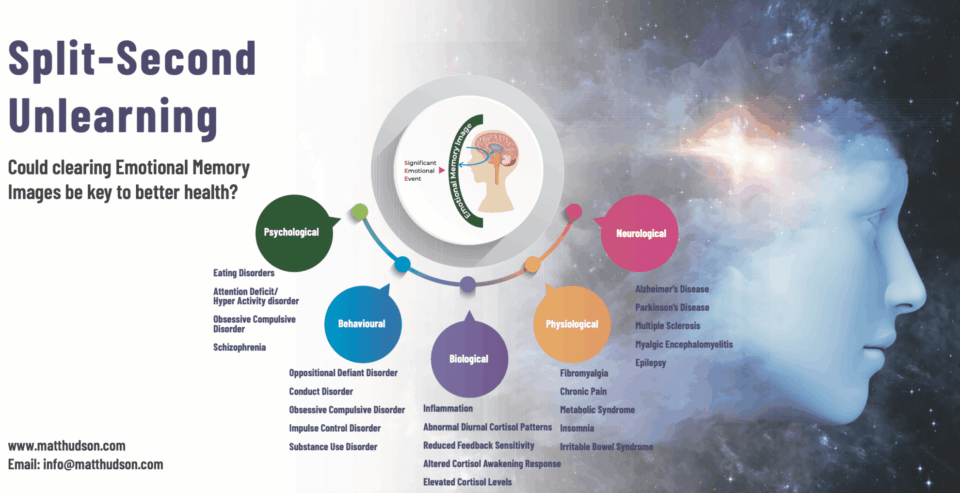
Conditions Treated by Split-Second Unlearning
A list of some of the conditions that have been successfully treated using Split-Second Unlearning Split-Second Unlearning (SSU) is a therapeutic approach proposed by Hudson and Johnson to address psychophysiological disorders by targeting Emotional Memory Images (EMIs) formed through traumatic or significant emotional events. These EMIs are believed to trigger chronic psychophysiological stress responses, contributing…
/
-
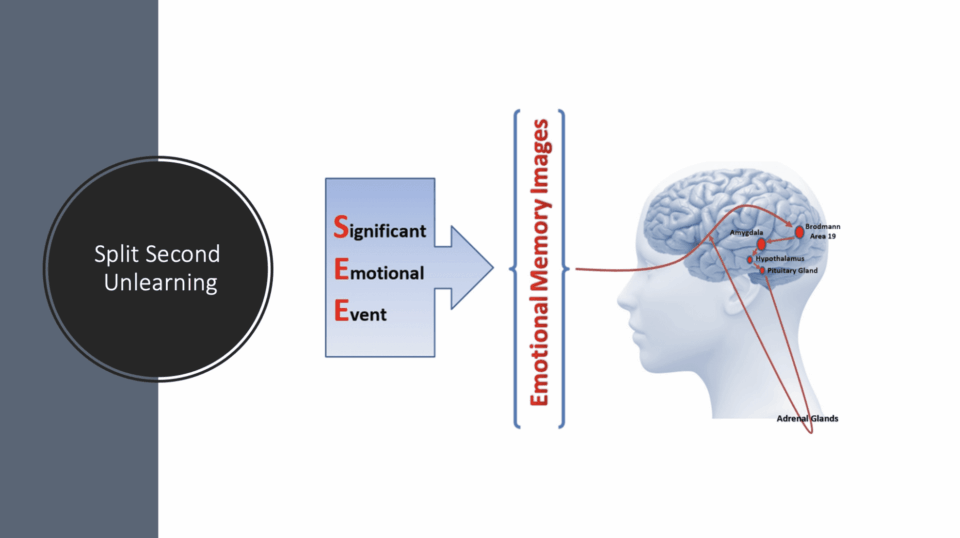
What If We’re Wrong? Rethinking the Mind-Body Connection in Medicine—and Harnessing MindReset to Combat the Chronic Disease Pandemic
Western medicine has long followed a principle articulated by René Descartes: “Only matter can impact matter.” This dualistic framework neatly separates the physical and the non-physical, prioritising the body as the sole domain of health and healing. While Descartes’ materialist approach has shaped scientific inquiry and advanced medical technology, it has also led to a…
/
-
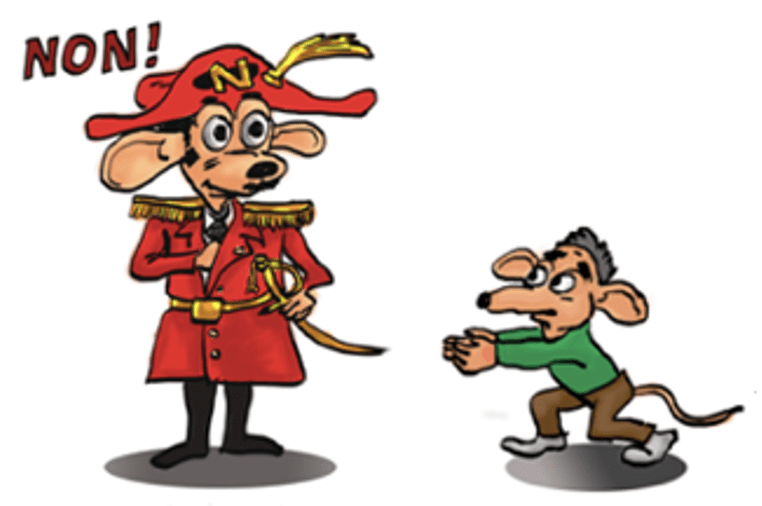
How Compliance may Lead to Chronic Pain or Dis-ease
This is a tiny overview from the book Family Rules Okay: Becoming Whole Without The Need For Approval. Here we look at the impact of a dysfunctional parental relationship on physical and mental health. The book then leads us to the larger societal aspect of the impact a dysfunctional paternalistic system of government can have…
/
-
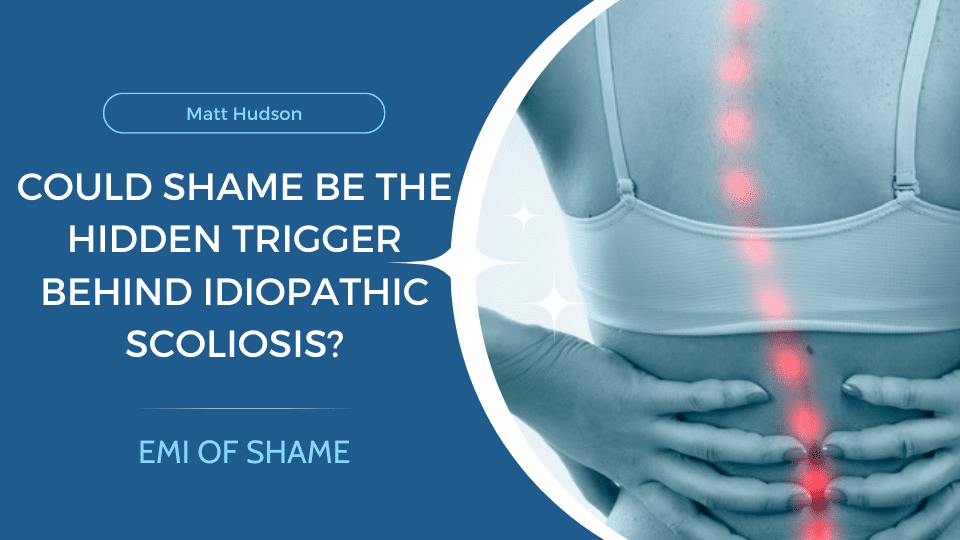
Shame as the Underlying Cause of Idiopathic Scoliosis: An Exploration
Idiopathic scoliosis, a condition in which the spine curves sideways without a known cause, affects millions of people around the world[i]. In under 10 years the prevalence, which is higher in girls than boys, has increased from 0.47-5.2%[ii] up to 0.93-12% globally[iii]. While its exact aetiology remains uncertain, researchers have considered various potential triggers and…
/
-

Easier Periods, Period!
Did you ever wonder why some of your friends sail through their monthly cycles without giving out a whine, becoming grumpy or depressed? Lisa and I were discussing recently as we were adding to another chapter in the new book. If you are one of the ladies who has had or continue to have what…
/
-

Bedwetting Therapy Secret
Before seeking therapy to help your child to stop wetting the bed consider the following. Do you really think your child needs therapy? The answer in the great majority of cases is ‘NO’, that’s because your child needs a hand waking up and using the toilet during the night. After age 5, if your child…
/
-

Nocturnal enuresis
Nocturnal enuresis means bedwetting during the night, for most children enuresis resolves by around age 5, some children can take a little longer. There are the few for which extra help is needed to treat bed wetting. Enuresis meaning Enuresis is taken from the Greek word (enourein) meaning ‘to void urine’. The International Children’s Continence…
/
-

How Do You Do Chronic Pain?
“Pain is inevitable. Suffering is optional.” — often attributed to Haruki Murakami, and true whoever said it first. The title of this piece is deliberate. Not “Do you have chronic pain?” but How do you do chronic pain? Because here is the plain and simple truth of the matter; pain is not a thing you…
/

