

“Not ‘what’s wrong with me?’ but ‘what happened to me?’”
Matt Hudson
Have you ever sat with a diagnosis — your own, or that of someone you love — and quietly asked, “But why? Why this? Why them?”
If that diagnosis is ALS, or motor neurone disease as we tend to call it here in the UK, you’ll know the answers on offer can feel thin. A little genetics. A little environment. A lot of “we don’t know”. And for most people that’s where the conversation ends.
I’d like to gently open it up again. Not to offer a cure — I’m not, and anyone who does should be treated with great caution. And not to suggest that anyone brought this on themselves — nobody did. Full stop. What I want to do is ask a question I believe is worth investigating: could undiagnosed trauma be one of the quiet threads woven into ALS?
The ALS Puzzle and the Missing Piece

Here’s the number that stopped me in my tracks. Around nine in every ten cases of ALS are what doctors call sporadic — no family history, no single gene to point at. Only around 5–10% are familial, linked to genes such as C9orf72, SOD1 and TARDBP.
So what’s going on in the other ninety per cent? The honest answer is that ALS appears to be multifactorial: age, sex, genetics and environmental exposures all seem to play a part, layered on top of one another, brick by brick, year after year. No single brick builds the wall.
And this is where I’d invite you to try a small but powerful reframe — one I come back to with client after client. Instead of asking, “What’s wrong with me?”, try asking, “What happened to me?” Gently. Without demanding one tidy answer. See how that changes the feel of the question?
Before we go any further, please hear this clearly: nothing in this article replaces neurological care. Keep working with your neurologist and your MND team. What I’m describing sits alongside that care, ideally with a trauma-informed practitioner — never instead of it.
Understanding Motor Neurone Disease
ALS is a progressive neurodegenerative disease. The motor neurones — the nerve cells that carry the brain’s instructions down through the spinal cord to the muscles — gradually stop working and die.
Think of a house where the wiring between the switch and the light is slowly fraying. You flick the switch, the signal leaves… but less and less of it arrives. That’s how it can feel: weakness in a hand, a dragging foot, twitching (fasciculations), stiffness, slurred speech, difficulty swallowing, and eventually the muscles that drive breathing are affected. Progression varies enormously from person to person, and some people live far longer than the averages suggest.
Now, let me be crystal clear about one thing. ALS is a real, physical disease of nerve cells. It is not “all in your head”. Nobody develops it because they thought the wrong thoughts or felt the wrong feelings. The symptoms are real and physical — always.
So why talk about trauma at all? Because the mind and the body aren’t two separate rooms in the same house. They share the same wiring.
Why I Write “Dis-ease”
You’ll notice I often write dis-ease with a hyphen. That’s quite deliberate. It goes back to the word’s original meaning — a lack of ease, a lack of harmony. I mean a whole system that has been ill at ease, sometimes for decades, long before anything has a name or a diagnosis attached to it.
Why not just say “psychosomatic”? Because that word carries baggage. It too easily implies that symptoms are imagined, and that leads to stigma, misdiagnosis and people feeling dismissed. My colleagues and I use the term psychophysiological dis-ease instead — it honours the fact that what happens in the mind and what happens in the body are woven together, and that the symptoms are real.
And what keeps a system ill at ease? Very often, in my experience, something the person doesn’t even know is there.
The Emotional Memory Image (EMI)
In my work I describe something I call an Emotional Memory Image, or EMI. It’s formed the first time we meet something overwhelming — real or imagined, and very often in childhood. In a split-second, the mind takes a nonconscious, multi-sensory snapshot of that moment and files it away… just in case. From then on, whenever life presents something similar, the snapshot can fire off the original stress response — out of time, out of awareness, and out of proportion to what’s actually in front of us.
In my 2025 paper in Healthcare and Rehabilitation, written with Nazish Chaudhary and Professor Mark Johnson of Leeds Beckett University, we set out how EMIs may form a bridge between childhood adversity and adult health. We propose that each time an EMI is activated, it nudges the body’s stress system — the HPA axis — out of balance again. Over time, that repeated “echo” of the original stress may contribute to chronic inflammation and a growing list of psychological and physical symptoms. And here’s the twist: the body’s natural survival responses then get treated as the problem, one symptom at a time, while the original imprint goes unnoticed. Trauma doesn’t always scream. Sometimes it whispers — as poor sleep, as pain, as a body that never quite settles.
And here’s the catch. You can’t consciously “think of” an EMI, because it lives below conscious awareness. Yet the body keeps responding to it, long after the event itself has passed. Imagine a smoke alarm that has been wired, by mistake, to an old photograph of a fire. There’s no smoke in the room today… but every time the photograph is in view, off goes the alarm. Again. And again. For years.
Or think of a barcode on a product in a shop. You can see the product perfectly well, but you can’t read the information inside the barcode — only the scanner at the checkout can. An EMI is a little like that. The stress system keeps scanning the world for matching barcodes, and every time it finds one, the price is paid in the body.
That’s why I call it undiagnosed trauma. It isn’t hidden because anyone is lying or forgetting. It’s hidden because it was never filed as an ordinary memory in the first place — it was filed as a threat.
Where Is Memory Actually Kept?
This is where my own research comes in, and I’ll admit it’s the part that gets me most excited!
We’ve long assumed that memory lives in the brain — full stop. But that assumption has been questioned. The biologist Donald Forsdyke proposed that memory may be stored, at least in part, outside the brain — an extracorporeal hypothesis set out in the Journal of Theoretical Biology (Forsdyke, 2009).
Bruce Lipton, meanwhile, famously placed the cell’s “brain” at the membrane — the boundary where the cell reads and responds to its environment. Building on my 2021 paper with Mark Johnson in Frontiers in Psychology, which set out Split-Second Unlearning as a theory of psychophysiological dis-ease, my 2022 paper extended Lipton’s idea outwards: from the membrane of the cell, to the field of energy surrounding the body, and into the peripersonal space — the space just in front of us, within arm’s reach.
Why does that matter? Because when I ask clients where a feeling is, they rarely point inside their head. They point out there. In front. Up and to the left. Close to the chest. The body seems to know exactly where the old picture is kept, even when the conscious mind has no idea.
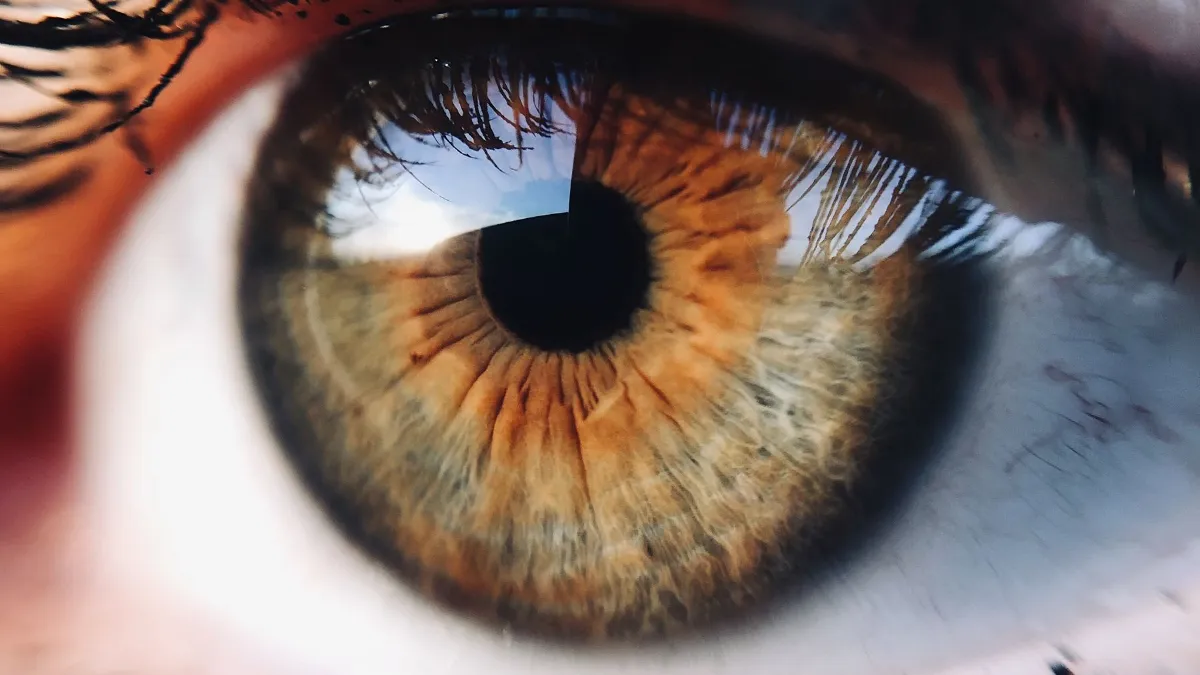
And that, interestingly, is why eye movements sit at the centre of my 2025 paper. When an EMI is stirred, the eyes may momentarily fixate in a particular direction — drawn towards, or away from, where the old threat is “stored”. Research already links trauma and PTSD with changes in eye-movement patterns, such as altered gaze and fixation. We propose that these tiny, nonverbal cues could one day help practitioners spot hidden trauma objectively, rather than relying only on what someone can consciously remember and put into words. These are ideas I’m putting forward to be tested — not settled facts — and I’d much rather they were examined than simply believed.
The Trauma–Chronic Illness Connection
The idea that early adversity echoes through the body isn’t new, nor is it fringe. In 1998, Vincent Felitti and colleagues published the landmark Adverse Childhood Experiences (ACE) study. What did they find? A dose-response relationship: the more categories of childhood adversity someone had lived through, the higher their risk of a whole range of chronic diseases in adult life.
And “trauma” isn’t only the dramatic stuff — the car crash, the assault, the war. It’s also the slow drip: emotional neglect, a parent who drank, a home where you had to be very good and very quiet to stay safe. Those are often the very Family Rules that keep running below conscious, long into adult life.
Think of your nervous system as a loyal guard dog. It barks at a picture of a burglar. It doesn’t know it’s a picture. It just knows its job is to protect you… so it never stops barking.

How the Body Carries Stress
So what does all that barking actually do?
Chronic stress keeps the body’s alarm system — the hypothalamic-pituitary-adrenal (HPA) axis — switched on. Cortisol rhythms can become disrupted, the sympathetic nervous system stays revved, and markers of inflammation can creep upwards. The neuroscientist Bruce McEwen called this cumulative wear and tear allostatic load. It’s rather like driving a car with the accelerator stuck down: even when you’re parked, the engine is roaring, and eventually parts begin to wear.
Researchers have proposed several ways that sustained stress could touch the nervous system over the long run:
- Neuroinflammation — the brain’s own immune cells (microglia and astrocytes) may become primed and over-reactive.
- Excitotoxicity — too much of the excitatory messenger glutamate can overstimulate neurones, and motor neurones appear particularly vulnerable to this.
- Oxidative stress and mitochondrial strain — the cell’s power stations struggle, and damage can accumulate.
- Epigenetic change — the DNA itself doesn’t change, but how it’s read can shift in response to long-term stress.
Every one of these processes has been studied in ALS. What hasn’t been shown is that trauma drives them in ALS. They’re plausible pathways — threads worth pulling — not proof.
What the Research Does — and Doesn’t — Show
So, is there any direct evidence linking trauma and ALS? A little. And it’s genuinely interesting.
A large Swedish register study published in JAMA Neurology in 2020 (Song and colleagues) followed people diagnosed with stress-related disorders, such as PTSD, and compared them with their siblings and with the general population. Those with stress-related disorders had a higher later risk of neurodegenerative diseases, with ALS among the conditions examined.
Military veterans also appear to develop ALS at higher rates than the general population — enough that the US Department of Veterans Affairs treats ALS as a service-connected condition. Repeated head injury is being studied as a possible contributor too.
Now for the honest part. Association is not causation. These studies can’t separate trauma itself from everything that can travel with it — smoking, physical injury, toxic exposures, disrupted sleep. Some studies find no link at all. And we simply don’t have the long-term research that follows people from trauma exposure through to diagnosis.
Not every study points the same way, and I want to be fair about that. A 2018 international study of 400 people with ALS and 450 controls (Parkin Kullmann and colleagues) found no evidence that stressful life events, work stress or anxiety raised the risk of ALS. In fact, the people with ALS scored higher on resilience. That matters, and it deserves to be taken seriously. Here’s what I’d add. That study, like most in this field, relied on questionnaires: on what people could consciously remember, count and report. An EMI, by its very nature, sits below conscious awareness. You can’t tick a box for something you don’t know is there. So the study tells us that remembered stress doesn’t seem to predict ALS. It can’t yet tell us about the imprints we don’t remember. Testing that properly would need different tools, such as the eye-movement markers I describe in my 2025 paper, alongside body-based measures of stress. Until those studies are done, the honest answer remains: we don’t know.
So where does that leave us? With an open question. A good one. One that deserves proper investigation rather than either dismissal or hype.
A Word of Caution — and of Compassion
I want to pause here, because this matters enormously.
Linking trauma to illness can be twisted into something cruel: “If only you’d dealt with your past, you wouldn’t be ill.” Please — never say that to anyone, and never say it to yourself. It isn’t true, it isn’t kind, and it isn’t what the evidence shows.
Medicine has a long and unhappy history of waving away real physical illness as “nerves” or “hysteria”. I have no wish to add a chapter to that. ALS is a complex mix of genetic and environmental factors, and trauma may — at most — be one thread among many.
What I am saying is this: let’s not ignore the whole person sitting in front of us. Their history matters. Their nervous system matters. Their peace of mind matters.
Rethinking Whole-Person Care
What would it look like if we took this seriously, without overclaiming?
In my 2025 paper we describe unaddressed EMIs as something of a ticking time bomb for public health: trauma that turns up in clinics as physical symptoms rather than emotional distress, with each symptom treated on its own while the source goes unseen. We argue for trauma-informed approaches that look for the imprint as well as the illness. We also note emerging research suggesting that disrupted REM sleep may be an early signal of both trauma-related and neurodegenerative conditions — not specific to ALS, but one more reason to look at the whole person.
For someone with ALS, that might mean a brief, gentle trauma history as part of neurology care — an ACE questionnaire, perhaps — not to assign blame, but to spot who might benefit from extra support. It might mean trauma-informed training for the professionals who walk alongside people with MND. And it might mean a mental health practitioner sitting inside the multidisciplinary team, rather than on the other side of a long waiting list.
None of this will repair a motor neurone. But reducing the body’s threat load — the barking guard dog, the alarm wired to a photograph — can make a real difference to how a person feels, sleeps, copes and connects. And that, surely, is worth having whatever the diagnosis.
So Where Do You Start?
If you’re living with ALS, or caring for someone who is, you don’t need to solve the whole puzzle today. Start small.
Here’s something you can try right now, if you’d like. Notice a feeling you carry — tension, dread, a heaviness. Now ask yourself: if this feeling were out there, rather than in here, where would it be? Up? Down? Close? Far away? Don’t do anything with it yet. Just look. You may be surprised how readily your body answers before your mind does.
That simple question is at the heart of Split-Second Unlearning (SSU). In SSU, rather than asking you to retell your story, the practitioner helps you notice the small, nonverbal signs of the stress response — where the eyes go, a held breath, a flicker of expression — and so bring the “barcode” gently into awareness. Once it’s in view, the memory becomes changeable for a short window, and the stress response attached to it can be updated through memory reconsolidation — what I like to call “remembering to forget”. The event doesn’t change. What changes is the charge it carries.
I want to be honest with you here, as I am in the paper: SSU is currently a conceptual model, developed through years of clinical observation. It hasn’t yet been tested in clinical trials, and we’ve called for observational studies and, in time, randomised controlled trials to put it properly to the test. That’s how it should be.
If you’d like a structured, gentle place to begin, my MindReset app (on Apple and Google) offers short, paced exercises designed to help settle the body’s threat response. And if more is coming up for you, please do work with a trauma-informed practitioner — alongside your neurologist and MND team, never instead of them.
An Open Question Worth Asking
Does undiagnosed trauma help shape ALS? I don’t know. Nobody does yet. The evidence points towards a possible association — and towards physiological pathways through which chronic stress may affect the body — but it does not show cause.
What I do know is that asking the question with care widens our view of the human being living with this disease. It moves us from “What’s wrong with you?” to “What happened to you — and how can we help you feel safer now?”
And that, to me, is where hope lives.
Frequently Asked Questions

Does trauma cause ALS?
No study has shown that trauma causes ALS. Some research — including a large Swedish register study — has found an association between stress-related disorders and a higher later risk of neurodegenerative disease, ALS included. That makes it a question worth investigating, not a settled fact.
Is this saying ALS is “all in the mind”?
Absolutely not. ALS is a real, physical disease of the nerve cells, with known genetic and biological drivers. Nobody causes their own illness. A responsible mind-body approach rejects blame entirely.
What is an Emotional Memory Image (EMI)?
It’s my term for a split-second, nonconscious, multi-sensory imprint formed during a first-time overwhelming experience — real or imagined — that can re-trigger the original stress response whenever something similar comes along. Because it sits below conscious awareness, you can’t simply “think of” it — which is part of why I describe this kind of trauma as undiagnosed.
Where can I read your research?
Split-Second Unlearning was first set out as a theory of psychophysiological dis-ease in Frontiers in Psychology (2021): doi:10.3389/fpsyg.2021.716535. My 2022 paper extending memory into the field around the body and peripersonal space is at doi:10.3389/fpsyg.2022.947952. Donald Forsdyke’s extracorporeal memory hypothesis is at doi:10.1016/j.jtbi.2009.01.028. My 2025 paper on EMIs, eye movements and the path from childhood adversity to adult health is in Healthcare and Rehabilitation: doi:10.1016/j.hcr.2025.100037.
I have ALS. What should I do with this?
Treat it as an invitation to look after your whole self — never as a reason for self-blame. Keep working with your neurologist and MND team. If you recognise unresolved stress or trauma in your story, a trauma-informed practitioner can help, and approaches such as MindReset can support you in settling your nervous system alongside your medical care.