
Where Is Trauma Memory Actually Stored? The Body Keeps the Score Reconsidered Van der Kolk showed that trauma lives in the body, not just the story—but where exactly is the score kept? I’m Matt Hudson. In my clinic and my 2021 paper, I argue it’s held in the space just beyond your skin: an Emotional Memory Image, below conscious reach. That’s why pointing to a feeling works when talking doesn’t—a locked door you can finally find the key to. The brain can rewrite it through reconsolidation: remembering to forget. Real stress, real symptoms—never “all in your head.” Healing is possible.
Where Is Trauma Memory Actually Stored? The Body Keeps the Score Reconsidered
Bessel van der Kolk’s The Body Keeps the Score changed how we understand trauma—but it leaves one question hanging, and that question has shaped my entire clinical practice. His work gave us the language of the body keeping score, and for that I am deeply grateful.
Yet where exactly is that score kept? That is the question I want to sit with you today, because the answer I have found may surprise you. It isn’t only inside the skin.
In my 2021 and 2022 papers I set out a different way of thinking about trauma memory: as an Emotional Memory Image held in the space around the body, in what researchers call peripersonal space. This is a hypothesis, not settled fact, and I’ll be honest about that throughout.
What follows is a gentle reconsideration of van der Kolk’s great idea, and a hopeful look at how memory reconsolidation might allow old scores to be rewritten.
What van der Kolk Got Right—and the Question He Left Open
Van der Kolk’s great insight was that trauma lives in the body, not just the story—that survivors can be hyperaroused or shut down, with an emotional brain that overrides the rational brain long after the danger has passed. He showed us that trauma survivors often carry physical sensations and bodily memories that talking therapy alone cannot reach.
Think of the body as a ledger that keeps writing entries long after the account has been closed. Every neglect, every frightening moment, every attachment wound leaves its mark in muscle tension, in breathing patterns, in the way you hold yourself. That is what it means to say the body keeps the score.
I have sat with countless people who could describe their trauma in perfect narrative detail yet still flinch at a raised voice or freeze in a lift. Their story was complete. Their body had not caught up. Van der Kolk named this gap and gave it dignity.
But here is the question he left open: if the body keeps the score, where exactly is that score written? And more importantly, can it be rewritten? That question is the bridge to everything I want to explore with you next.
If Trauma Lives in the Body, Where Exactly Is the Score Kept?
If trauma lives in the body, the natural next question is: where exactly? My answer, drawn from my 2021 and 2022 papers, is that the score isn’t only kept inside the skin. It is held as an Emotional Memory Image in the space around you.
That shift sounds small. In practice it changes everything about how trauma healing can work, because it gives you and me somewhere precise to look.
Emotional Memory Images and the Peripersonal Space in Front of You
An Emotional Memory Image is the felt picture that comes with a feeling. It is the sense that something is “there” in the space in front of you, even when nothing visible is there at all. It sits below conscious awareness, which is why talking alone so often misses it.
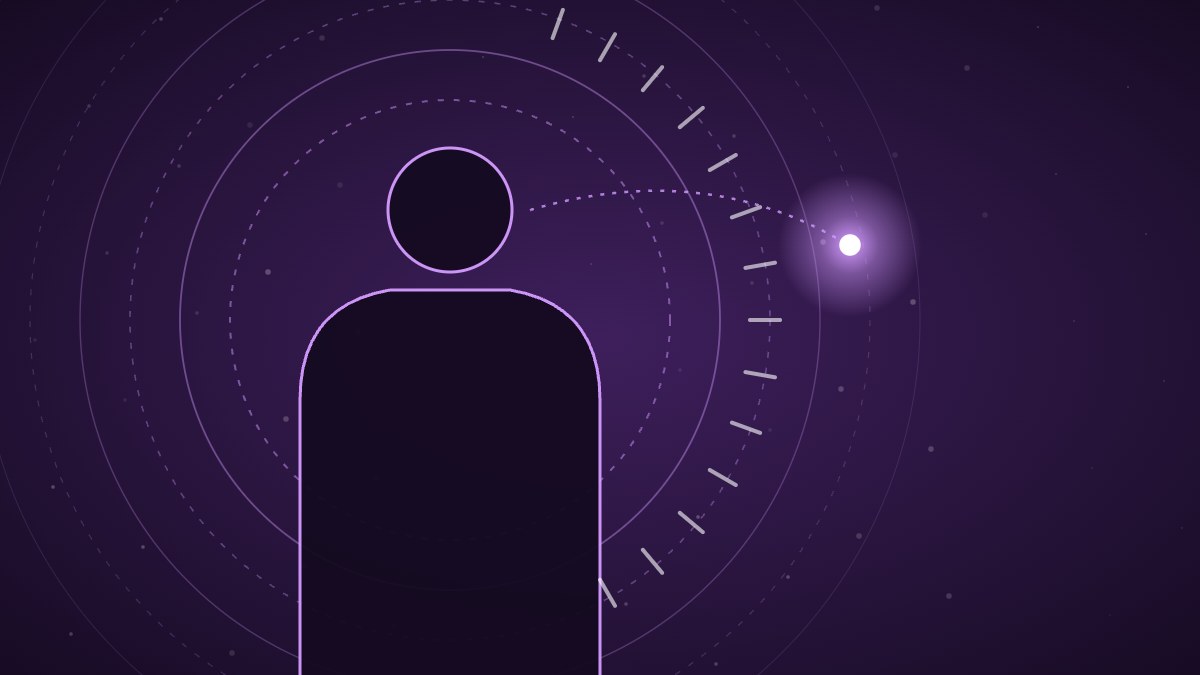
Where does it sit? In what researchers call peripersonal space, the bubble of space immediately around your body that your brain treats as “yours”. Think of an EMI as a projector beam cast just ahead of you: the light lands outside your skin, yet the machine sits within. In my 2022 paper (doi 10.3389/fpsyg.2022.947952) and my 2021 paper (doi 10.3389/fpsyg.2021.716535) I set out how these images are held in that near space, a view consistent with Forsdyke‘s extracorporeal memory hypothesis (doi 10.1016/j.jtbi.2009.01.028), which I present as a hypothesis rather than settled fact.
Here is something you can try. Bring a mild worry to mind, then simply notice where the feeling seems to sit in front of you. Left or right? Close or far? That location is the clue, and it is real, not imagined. Your physical sensations are giving you accurate information about where a traumatic memory is being held.
This is also why pointing to where a feeling lives can work when words do not. The emotional brain responds to that gesture in a way the rational brain cannot talk its way into. Once you know where an image sits, it can be rewritten through memory reconsolidation, remembering to forget. That is the hopeful part, and it is where the next step begins.
Why Does Pointing to a Feeling Work When Talking Doesn’t?
Many people can talk about a difficult memory for hours without relief, yet the moment they point to where the feeling sits, something shifts. I have watched this happen in my clinic more times than I can count. The words keep circling, and then a hand lifts, hovers somewhere near the chest, and the room goes quiet.
It is a genuine puzzle. Talking is meant to help, and often it does. But for many trauma survivors, the emotional brain stays untouched by even the most articulate description. You can explain the memory perfectly and still feel exactly as you did.
My answer comes back to a simple point. The feelings that trouble you most sit below conscious awareness. Speech is a conscious process, so it reaches only what is already conscious. Pointing is different. It is spatial, felt and wordless, which is why it can reach what talking cannot.
In the next section I want to introduce the idea that carries this further: that some traumatic memories are held in the space around you, not only inside you. It sounds odd at first. Stay with me.
Extracorporeal Memory: The Forsdyke Hypothesis and Below-Conscious EMIs
The idea that memory can be held outside the body sounds strange until you look at the evidence, and Forsdyke’s extracorporeal memory hypothesis (doi 10.1016/j.jtbi.2009.01.028) gives it a serious scientific footing. In simple terms, memory need not be stored only within the brain and body. It can also be held in the space around the organism.
Treat this as a hypothesis, not settled doctrine. That matters. But it fits what I kept seeing in clinic, and it shaped my 2021 and 2022 papers on what I call the Emotional Memory Image (EMI). An EMI is the felt image of a memory that sits in the peripersonal space in front of the body. It is real, it is consistent, and it is below conscious awareness.
Here is why talking misses it. Asking someone to describe an EMI in words is like trying to read a book by describing its cover. You can be eloquent about the cover and never turn a page. Talking is a conscious, verbal process, so it cannot reach something that lives below consciousness. Pointing is a spatial, felt process, so it can.
Picture a client who cannot name the feeling at all but lifts a hand and points to a spot just in front of their chest. That pointing is not a gesture. It is the doorway. The moment they locate the EMI in space, the feeling becomes something we can work with, gently and at their pace.
None of this replaces the insight van der Kolk gave us, that the body keeps the score. It simply asks where, exactly, the score is kept. My work suggests the answer reaches beyond the skin, into the space you carry around you.
Can the Score Be Rewritten? Memory Reconsolidation and “Remembering to Forget”
Yes, the score can be rewritten, and the mechanism is memory reconsolidation: the brain’s ability to update an old memory when it is briefly reactivated. Think of it like a document that unlocks itself for editing the moment you open it. While it is open, you can change the wording, and when you save it, the new version is what gets stored.
This is where my work builds on van der Kolk’s. If the score lives partly in the body, and if, as my 2021 and 2022 papers suggest, it is also held as an Emotional Memory Image in the space just in front of you, then reconsolidation is how that image loses its charge. I call it remembering to forget. You do not erase the traumatic memory. You re-store it with a calmer emotional tone, so the emotional brain stops sounding the alarm.
Here is how I walk people through it. Three steps, taken gently:
- Notice and point. Bring the feeling to mind and point to where it sits in the space around you. Naming the location is the first act of self-regulation.
- Stay in your safe window. Use slow breathing and grounding to keep your body regulated. If you tip into feeling hyperaroused or shut down, pause and settle before continuing.
- Let the image update. Allow the felt image to soften and shift on its own. You are not forcing a story or hunting for a reveal, just letting the picture change.
For many people this takes weeks, not years, when practised little and often. The common mistake is pushing for a dramatic “reveal” rather than letting the image quietly soften. That pressure re-traumatises instead of healing. The MindReset app can guide the pointing and breathing between sessions, and I always suggest working alongside a trauma-informed practitioner. Small, safe repetitions are how the score gets rewritten.
How Does Undiagnosed Trauma Show Up as Dis-ease?
Undiagnosed trauma rarely announces itself as trauma. It shows up as dis-ease: persistent stress, unexplained physical symptoms, sleep that never restores, a body that stays on guard. Van der Kolk showed us that the body keeps the score, and in my clinic I see that score written in symptoms long before anyone connects it to what happened years ago.
Think of a smoke alarm wired to go off at burnt toast. That is a hyperaroused nervous system: the threat is gone, but the alarm keeps shrieking. Others swing the other way and shut down, going numb and flat. Either way, the stress response never quite switches off, and the body pays for it.
Here are the ways it most often surfaces, and what helps:
- Chronic stress and cortisol dysregulation. The system stays braced, so you feel wired and exhausted at once. Self-regulation, slow breathing and gentle yoga help the body learn it is safe to settle.
- Hyperarousal or shutdown. You may startle easily, or feel detached from your own physical sensations. Building physical self-awareness in small doses, with safe connections around you, gradually widens your window of tolerance.
- Sleep disruption, including REM changes. Sleep that never restores is common after traumatic stress. A steady wind-down, meditation and calming the body before bed can help, alongside a trauma-informed practitioner.
- Physical symptoms that fit no clear diagnosis. Pain, gut trouble, tension with no obvious cause. These are real bodily events, and pointing to where a feeling sits can sometimes reach what talking cannot.
One caution, and I mean this warmly. These symptoms are real, never “all in your head and they should always be checked medically first. Child abuse and neglect are adverse experiences that often go unrecognised for decades, quietly shaping how the body responds. Naming that link is not blame. It is the start of healing.
In my 2021 and 2022 papers I proposed that some of this score is held as an Emotional Memory Image in the space just in front of the body, the peripersonal space, consistent with Forsdyke’s extracorporeal memory hypothesis. That remains a hypothesis, but it explains why pointing to where a feeling lives can work when words stall. Tools like the MindReset app (on Apple and Google) support that gentle self-regulation between sessions, and a trauma-informed practitioner can walk alongside you. The score can be rewritten. That is the hopeful part.
Where Does MindReset Fit—and Why Work Alongside a Trauma-Informed Practitioner?
MindReset is the app I built to make this work accessible between sessions—a guided way to notice where a feeling sits and to support memory reconsolidation at your own pace. It is available on Apple and Google, and it walks you gently through locating an Emotional Memory Image in the space around your body, then holding it steady enough for the memory to soften.
Think of it as a quiet companion for the days between appointments, not a stand-in for the appointment itself. It is a support tool, not a replacement for therapy. The app cannot notice when your system is tipping into overwhelm, and it cannot offer you the warmth of another person sitting with you. That is where a trauma-informed practitioner earns their place.
Someone trained in this work can keep you within a safe window, recognise the moment to pause, and hold the relational safety that safe connections require. Memory reconsolidation asks a lot of your nervous system, and having a steady other person nearby makes that load lighter. It is the difference between swimming alone and swimming with someone watching the tide.
So when should you seek a practitioner rather than going it alone? If symptoms feel overwhelming, if there is a history of child abuse or neglect, or if the dis-ease simply persists despite your best efforts, please reach out to someone qualified. That is not failure. It is wisdom, and it is often the kindest thing you can do for yourself.
How This Builds on The Body Keeps the Score: From Skin to Surround
My work doesn’t replace van der Kolk’s. It extends his map: if he showed that the score is kept in the body, I’m asking whether part of that score is kept in the space just beyond it.
That is a real debt, not a polite nod. Van der Kolk moved the conversation away from “what’s wrong with you” and towards “what happened to you and he gave physical sensations a central place in trauma. I’m standing on that ground, not digging it up.
What follows is a careful step further out. I’ll be honest about what is established and what is still a working idea, so you can hold it with the same care I do.
Extracorporeal Memory as Hypothesis, Not Doctrine
I want to be plain: extracorporeal memory is a hypothesis, not a settled fact, and good practice means saying so.
My 2021 and 2022 papers describe Emotional Memory Images, or EMIs, held in the peripersonal space just in front of the body. That sits consistently with Forsdyke’s extracorporeal memory hypothesis. Consistent with is not the same as proven, though, and I won’t pretend otherwise.
Why does this matter for trauma survivors? Because you deserve claims that are honest. Your symptoms are real whether or not my model turns out to be the full picture, and nobody should tell you your experience is “proven” by a single framework.
Think of it like a map drawn while the territory is still being surveyed. The map can still get you moving in the right direction, even as the edges get redrawn.
So here are the practices I’d ask of anyone using this idea:
- Hold the model lightly. Let it guide you, not define you.
- Keep checking against evidence. Notice what actually shifts in your body and your life.
- Pair any self-work with a trauma-informed practitioner. Tools like the MindReset app can sit alongside that support, never in place of it.
The hopeful part is this: uncertainty about the mechanism doesn’t block healing. You can work gently with the space around you, with safe connections and steady self-regulation, and let the evidence catch up in its own time.
What the Research Says: Hudson 2021, Hudson 2022, and the Road Ahead
The research behind this article is specific and citable: my 2021 paper (doi 10.3389/fpsyg.2021.716535) and my 2022 paper (doi 10.3389/fpsyg.2022.947952) set out EMIs and peripersonal space, alongside Forsdyke’s extracorporeal memory hypothesis (doi 10.1016/j.jtbi.2009.01.028). Each one adds a different piece to the same puzzle.
My 2021 paper introduced Emotional Memory Images (EMIs) and their relationship to peripersonal space, the felt bubble just in front of the body. The 2022 paper developed that model further, asking how these images sit in the space around you and why pointing to a feeling can work when talking stalls. Forsdyke’s hypothesis offers the wider frame: memory that lives beyond the skin, held in the space we treat as ours.
Where does that leave us? Honestly, at the beginning of a longer road. The model needs replication by other researchers, and the mechanism itself remains an open question. I would rather say that plainly than oversell it. What matters just as much is pairing research with real clinical care, so that findings reach people as support rather than theory.
So here is my hopeful close. Take a moment now and notice where a feeling sits for you, in your chest, your shoulders, the air just ahead of you. That noticing is yours. If you want company with it, seek out a trauma-informed practitioner and let the work unfold gently, one small step at a time.
Frequently Asked Questions
What does “The Body Keeps the Score, But Where Exactly? Trauma Memory Beyond the Skin” mean?
This question builds directly on Bessel van der Kolk’s insight that the body keeps the score—that trauma lives in the body, not just in the story we tell about it. “The Body Keeps the Score, But Where Exactly? Trauma Memory Beyond the Skin” pushes that idea further by asking where, precisely, the score is kept, and whether it can be rewritten. The answer proposed is that the score isn’t only held inside the skin: it is held as an Emotional Memory Image (EMI) in the space around you—the peripersonal space in front of the body—consistent with the extracorporeal memory hypothesis. This is presented as a hypothesis, not settled fact.
Where exactly is trauma memory stored, according to “The Body Keeps the Score, But Where Exactly? Trauma Memory Beyond the Skin”?
According to “The Body Keeps the Score, But Where Exactly? Trauma Memory Beyond the Skin,” the score is not kept solely within the body. Trauma memory is held as an Emotional Memory Image (EMI) in the space around you—specifically the peripersonal space in front of the body (Hudson 2022, doi 10.3389/fpsyg.2022.947952; Hudson 2021, doi 10.3389/fpsyg.2021.716535). This is consistent with Forsdyke’s extracorporeal memory hypothesis (doi 10.1016/j.jtbi.2009.01.028), which suggests memory can extend beyond the skin. It is important to note that extracorporeal memory is offered as a hypothesis rather than an established certainty.
Why does pointing to where a feeling is work when talking doesn’t, in “The Body Keeps the Score, But Where Exactly? Trauma Memory Beyond the Skin”?
“The Body Keeps the Score, But Where Exactly? Trauma Memory Beyond the Skin” explains that Emotional Memory Images (EMIs) sit below conscious awareness. Because they are below conscious, talking about a feeling often doesn’t reach them—but pointing to where a feeling is located in the space around the body can, because it directly engages the EMI held in peripersonal space. This is why the approach in “The Body Keeps the Score, But Where Exactly? Trauma Memory Beyond the Skin” favours locating feelings spatially rather than relying on talk alone.
Can the score be rewritten, and how does “The Body Keeps the Score, But Where Exactly? Trauma Memory Beyond the Skin” say it’s done?
Yes—”The Body Keeps the Score, But Where Exactly? Trauma Memory Beyond the Skin” argues the score can be rewritten through memory reconsolidation, which can be described as remembering to forget. Rather than only retelling the story, the process updates the Emotional Memory Image held in the space around you, allowing the trauma memory to be revised rather than simply relived. This is the practical payoff of asking “The Body Keeps the Score, But Where Exactly? Trauma Memory Beyond the Skin”: if the score is kept beyond the skin, it can also be rewritten there.
How does “The Body Keeps the Score, But Where Exactly? Trauma Memory Beyond the Skin” connect undiagnosed trauma to dis-ease?
“The Body Keeps the Score, But Where Exactly? Trauma Memory Beyond the Skin” links undiagnosed trauma to dis-ease—the idea that unresolved trauma held as an Emotional Memory Image in the space around the body can manifest as ongoing physical and emotional dis-ease. When trauma goes unrecognised, the score keeps being kept, silently, beyond the skin. Recognising where the score is held is therefore a first step towards rewriting it and reducing the burden of dis-ease.
How can someone apply “The Body Keeps the Score, But Where Exactly? Trauma Memory Beyond the Skin,” and where does the MindReset app fit in?
To apply “The Body Keeps the Score, But Where Exactly? Trauma Memory Beyond the Skin,” you can begin by noticing where in the space around your body a feeling seems to sit, rather than only describing it in words—an approach supported by the MindReset app, available on Apple and Google, which guides this kind of spatial, EMI-focused work. Because trauma memory can run deep, it is best to use these tools alongside a trauma-informed practitioner. The framing of “The Body Keeps the Score, But Where Exactly? Trauma Memory Beyond the Skin” is intended to complement, not replace, professional care, and extracorporeal memory remains a hypothesis to be explored with that support.