-
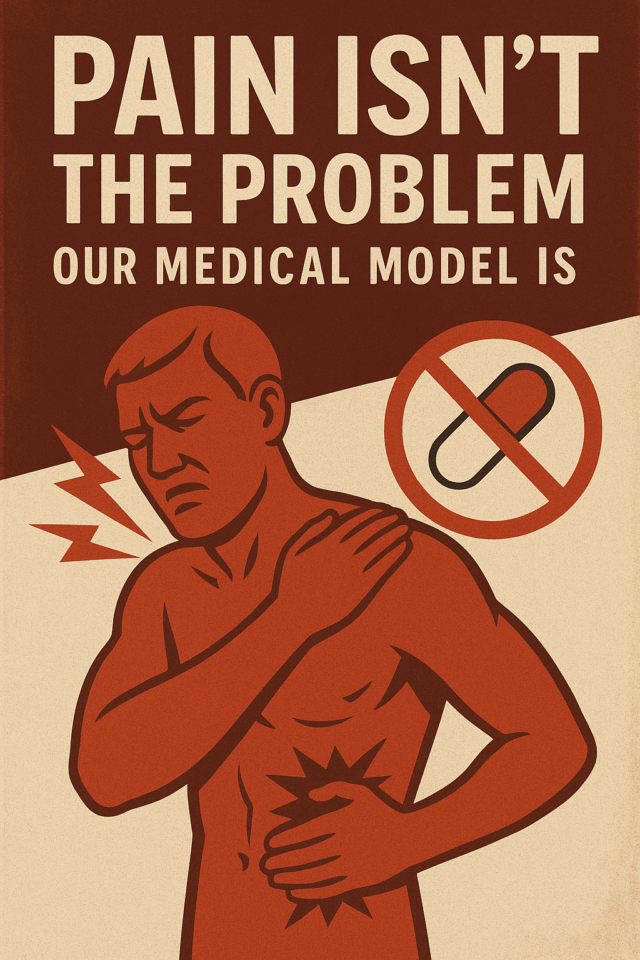
Pain Isn’t the Problem, Our Medical Model Is
The shortcomings of Western medicine are significant, often stemming from a medical model that emphasises treating symptoms rather than promoting holistic healing. This focus has contributed to the growth of a substantial drug industry, which, although lucrative, frequently neglects the root causes of illness. Even with advancements in medical technology and treatment options, many individuals…
/
-

Sticky Pain and Other Chronic Psychophysiological Dis-eases
Chronic psychophysiological dis-eases, commonly known as “sticky” conditions, create complex connections between the mind and body that can be challenging to untangle. These conditions often arise from undiagnosed trauma and present as ongoing physical pain or discomfort. This article delves into what these diseases are, the diagnostic processes involved, and the significant role trauma plays…
/
-

The Healing Power of Metaphors: A Biophilic Mindset for Pain and Healing
If pain had a voice, it wouldn’t be clinical. It wouldn’t speak in milligrams or MRI scans. It would whisper, roar, curl up in corners, or dance like rain across your skin. And that’s why metaphor matters, because pain doesn’t speak science. It tells a story. In the past century, we’ve seen the rise of…
/
-
The Metaphor Cure – How Language Can Heal What Medicine Can’t
This piece has been folded into the fuller essay The Healing Power of Metaphors: A Biophilic Mindset for Pain and Healing, which now carries its opening and argument in one place. If pain had a voice, it wouldn’t be clinical. It wouldn’t speak in milligrams or MRI scans. It would whisper, roar, curl up in…
/
-

Metaphors, Biophilia, and the Psychophysiological Landscape of Pain
This piece has been folded into the fuller essay The Healing Power of Metaphors: A Biophilic Mindset for Pain and Healing, which now carries its opening and argument in one place. Introduction Metaphors are not just decorative linguistic flourishes—they are foundational cognitive tools that guide perception, decision-making, and behaviour. In our 2023 article, Perspectives on…
/
-

Neglect: A Moment Missed, A Lifetime Imprinted. How Split-Second Unlearning Offers a Paradigm Shift in the Treatment of Childhood Emotional Neglect
Childhood emotional neglect (CEN) is often a silent trauma, difficult to detect, harder to define, and routinely ignored in mental health practice. Unlike abuse, which leaves bruises that can be seen or scars that can be documented, neglect is the absence of what should have been: warmth, presence, mirroring, and emotional attunement. The impact? Subtle…
/
-

Could psychophysiological dis-ease be a result of an undiagnosed trauma?
Psychophysiological dis-ease refers to conditions related to psychophysiology where psychological factors, such as stress, influence physiological functioning, often resulting in ailments like hypertension, tension headaches, and ulcers. Understanding the role of trauma, whether acute, chronic, or developmental, is crucial. Unresolved or undiagnosed trauma can significantly impact mental and physical health. The connection between trauma and…
/
-
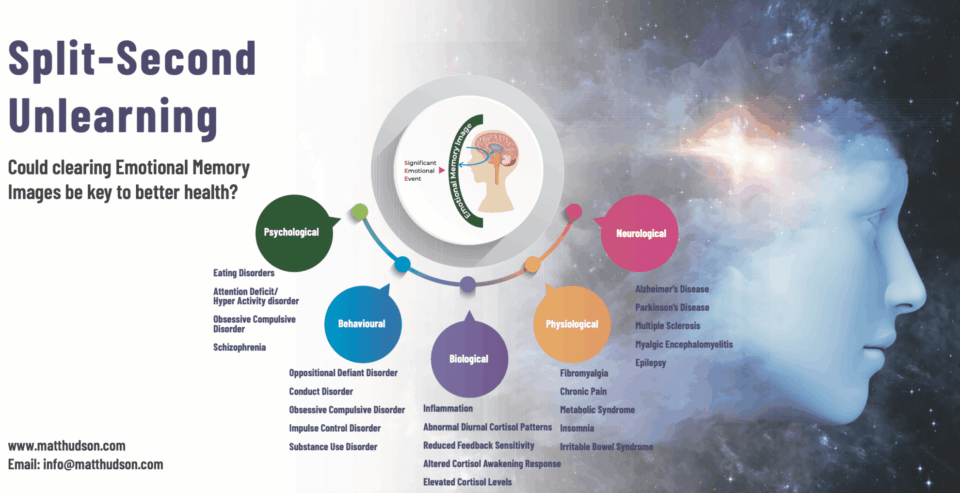
Conditions Treated by Split-Second Unlearning
A list of some of the conditions that have been successfully treated using Split-Second Unlearning Split-Second Unlearning (SSU) is a therapeutic approach proposed by Hudson and Johnson to address psychophysiological disorders by targeting Emotional Memory Images (EMIs) formed through traumatic or significant emotional events. These EMIs are believed to trigger chronic psychophysiological stress responses, contributing…
/
-
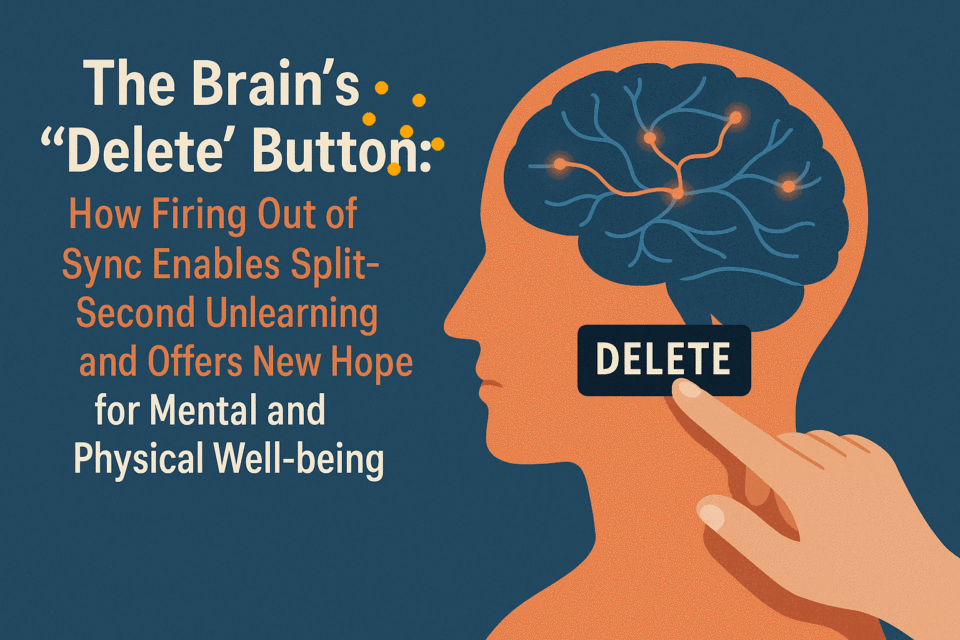
The Brain’s “Delete” Button: How Firing Out of Sync Enables Split-Second Unlearning, Offering New Hope for Mental and Physical Well-being
For decades, we’ve understood that the brain learns by strengthening connections between neurons that fire together – Hebb’s famous learning rule. This “cells that fire together, wire together” principle has been the bedrock of our understanding of learning and memory[i]. However, new research[ii] is revealing a complementary and equally crucial mechanism: a neural “delete” button…
/
-

The Wolf at the Door: Avicenna, Emotional Memory Images, and the Hidden Cost of Modern Stress
In the 11th century, Persian polymath Avicenna (Ibn Sina) conducted an experiment that would echo through the ages of medicine, psychology, and now, behavioural neuroscience. His now-famous study involving two lambs and a wolf laid the groundwork for understanding the devastating impact of chronic emotional stress on physical health. Today, as we face unprecedented levels…
/
-

Split-Second Unlearning Aligns with Pavlov’s Goal of Uniting Mind and Body
Key Points Introduction Ivan Pavlov, a renowned physiologist, emphasized the importance of uniting physiological and psychological aspects, famously stating in 1932 that this integration was a crucial scientific endeavor. Almost a century later, Matt Hudson stands at the forefront of this pursuit through his groundbreaking work on Split-Second Unlearning, exploring how emotional memories influence the…
/
-
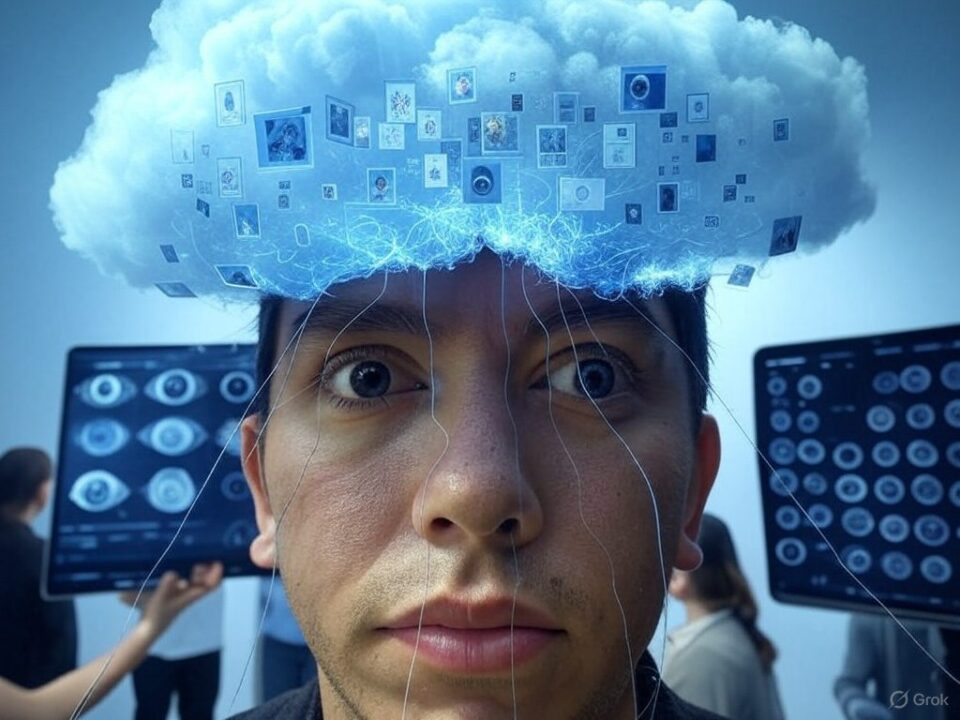
Unlocking Trauma: How Eye Movements and Emotional Memory Images (EMIs) Can Diagnose PTSD and ACEs
Read next: MindReset’s eye-tracking and The body doesn’t keep the score — your brain keeps predicting it.
/
-
The External Screen: How the Mind’s Eye Drives Fear, Anxiety and Chronic Disease
The External Screen Model – The site of the Emotional Memory Image Abstract This paper proposes that emotional memory images (EMIs) – mental visualisations of the objects of our phobias or traumatic memories – are unconscious pictures viewed on an external screen (ES). Ideomotor movements represent a sensory feedback that the body experiences in response…
/
-

The Nature of Fear: Understanding Its Roots, Effects, and Transformation
Fear is one of the most fundamental human emotions, profoundly shaping our thoughts, behaviours, and physiological responses. It can be both a survival mechanism and a psychological barrier, protecting us from harm while also limiting our growth and potential. Understanding fear from multiple perspectives, biological, psychological, psychophysiological and philosophical, allows us to transform it from…
/
-
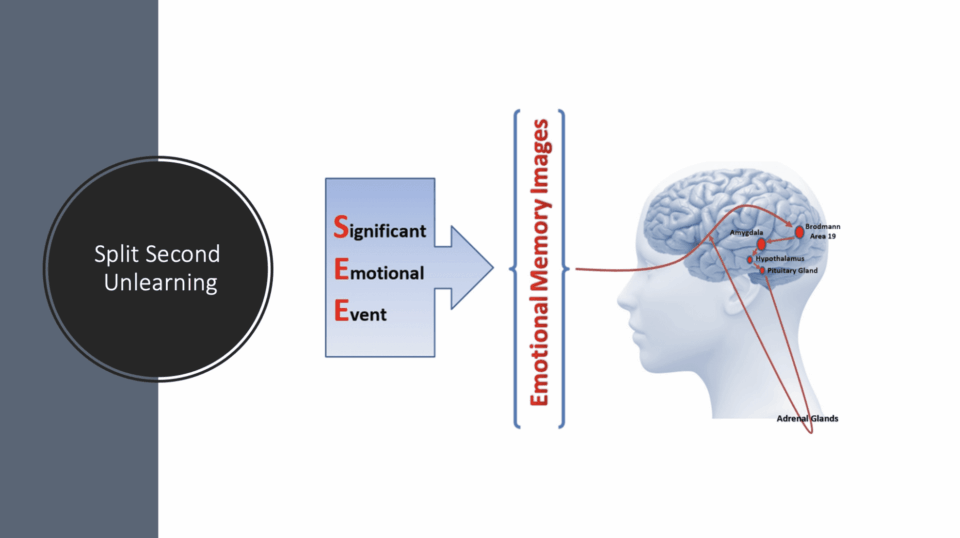
What If We’re Wrong? Rethinking the Mind-Body Connection in Medicine—and Harnessing MindReset to Combat the Chronic Disease Pandemic
Western medicine has long followed a principle articulated by René Descartes: “Only matter can impact matter.” This dualistic framework neatly separates the physical and the non-physical, prioritising the body as the sole domain of health and healing. While Descartes’ materialist approach has shaped scientific inquiry and advanced medical technology, it has also led to a…
/
-
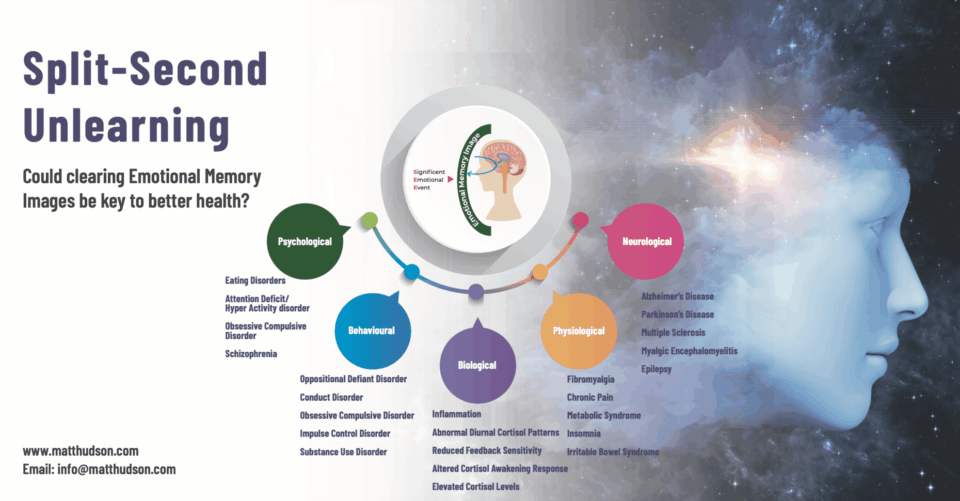
Extracorporeal Storage of Emotional Memory Images: A Theoretical Synthesis
Recent developments in memory theory, notably Donald Forsdyke’s hypothesis of extracorporeal “cloud storage” offer a provocative lens to reconsider the storage and retrieval of Emotional Memory Images (EMIs). Forsdyke suggests that memory may extend beyond the brain’s physical architecture, potentially involving non-local repositories akin to cloud computing’s distributed data access. This challenges the conventional view…
/
-

What are emotional memory images and how do they relate to trauma in the workplace
An overview of the power Emotional Memory Images have on the unknowing individual. Emotional overwhelm can leave an indelible mark, driving negative attitudes at work, accidents and even physical as well as mental health issues.
/
-

Unravelling the Noose of Silence: Navigating Fear, Family Secrets and Family Rules
One of my favourite quotes from the soon-to-be-released Family Rules, a peer-reviewed article. Prof. Mark Johnson and I delve into how a dysfunctional paternal system can generate long-lasting pain and other chronic disorders. The quote talks about what happens when the child sees or hears something that the parent wishes they hadn’t. It then captures…
/
-

Fear Of Flying
The fear of flying, also known as aviophobia or aerophobia, is a common anxiety disorder characterized by an intense fear or anxiety specifically related to flying or being on an airplane. This fear can range from mild discomfort to severe panic attacks, making it challenging for individuals to travel by air. The causes of this…
/
-
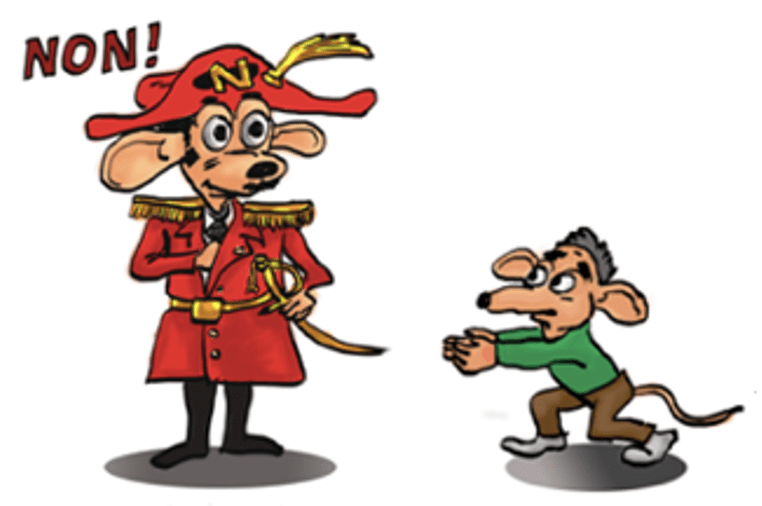
How Compliance may Lead to Chronic Pain or Dis-ease
This is a tiny overview from the book Family Rules Okay: Becoming Whole Without The Need For Approval. Here we look at the impact of a dysfunctional parental relationship on physical and mental health. The book then leads us to the larger societal aspect of the impact a dysfunctional paternalistic system of government can have…
/
